An embedded treasury AI partner, a coherent view of how your group holds cash, debt and risk across every entity, and a forward look that catches the covenant breach before it lands — in a single on-premise platform.
Every install ships with Q — an embedded treasury AI partner with read access to your whole group position, system-prompted in treasury vocabulary. It doesn't just chat; it forecasts, reconciles, reports and reasons over your cash, debt and exposures.
Analyst-grade reads of the group — cash by entity, exposure, headroom — citing the exact accounts, facilities and deals behind each figure.
Ask anything of your live position in plain English. Q resolves it across entities, banks, currencies, facilities and hedges.
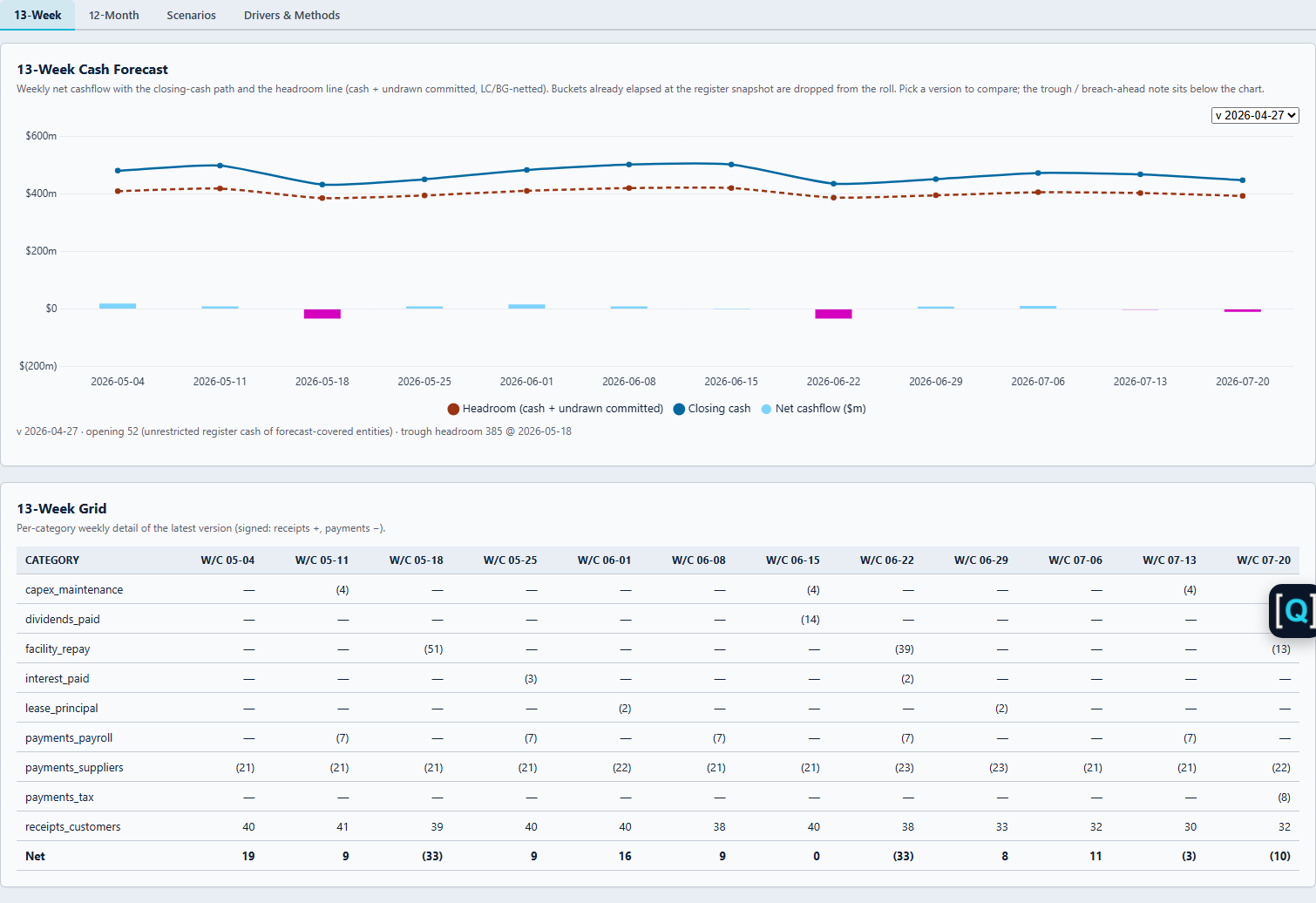
Build and stress the 13-week and 12-month forecast, compare base, budget and stress scenarios, and watch the cash runway shift in seconds.
Board treasury packs and lender compliance certificates, drafted from live numbers and exportable for the meeting.
"What if we draw A$100m and the AUD falls 5%?" — see the hit to liquidity, leverage and covenant headroom before you act.
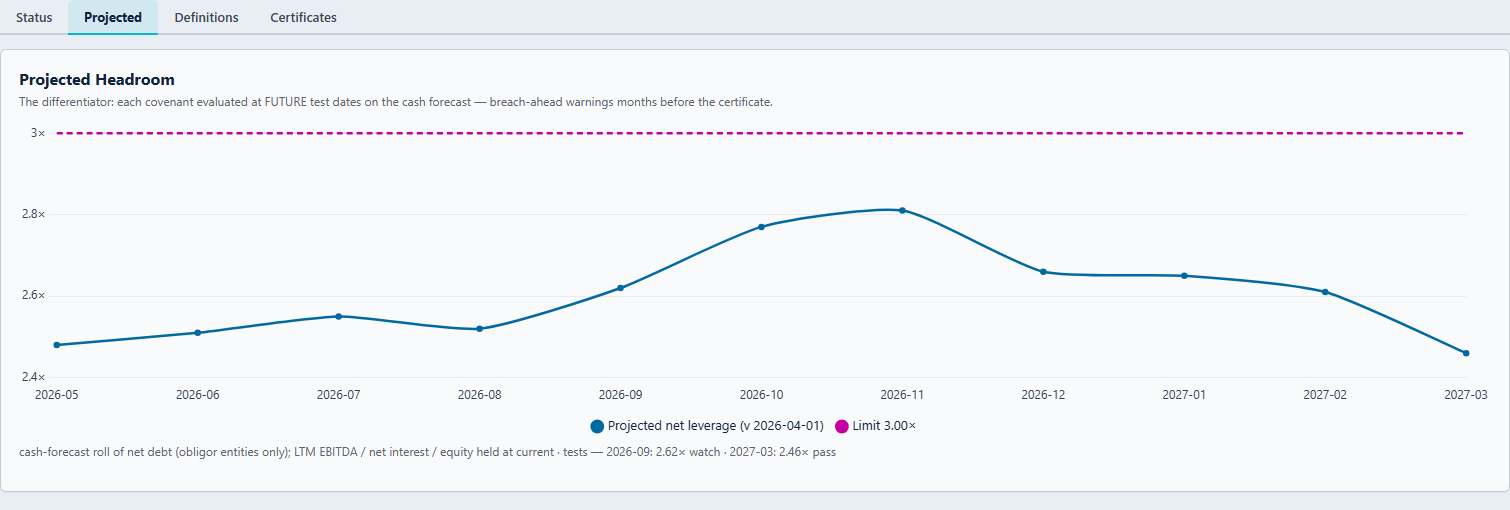
Q projects covenant headroom forward on the forecast and flags the breach ahead of time — not after the quarter closes.
Ask Q about your own hedging bands, counterparty limits and mandates — it reasons over the policy encoded into the platform, not just the data.
Spin up a refinancing review, a hedging proposal or a cash-pooling study and have Q build, organise and revisit the analysis.
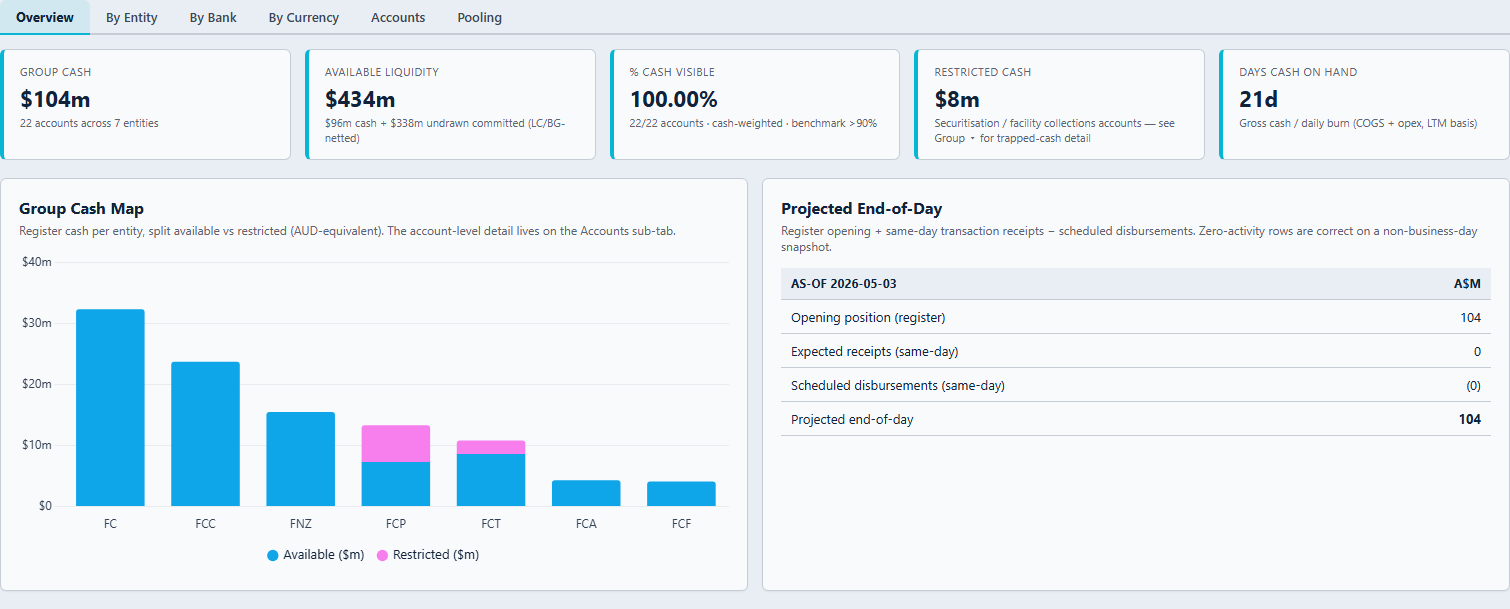
A walk through the cash map, Q, the forecast and the covenant board — running on the Future Corp demo dataset.
TraiQ is built on one coherent model of the group — not a pile of disconnected reports. Every number traces along the same chain, which is also how Q reasons about your treasury.
Subsidiaries, JVs and accounts across countries and currencies — each with its own cash and obligations.
Bank accounts, facilities, receivables, payables and hedges — the positions themselves, with their cashflows and terms.
Every position generates exposure — liquidity, leverage, FX, rate and counterparty — aggregated across the group.
Treasury policy, hedging mandates and lender covenants govern those exposures — and TraiQ monitors headroom against them live.
This Entity → Position → Risk → Policy model is fully configurable to your group — the structure, the groupings and the mandates are yours, not a fixed template.
Each area has an authoritative home in the platform — monitored live, with the methodology behind it and full drill-down to the underlying entities, accounts and facilities.
Treasury, finance, the CFO and the board each need a different cut of the same group position — TraiQ gives every one of them their own view, drawn from the same live numbers.
The whole group position in one view — cash by entity, bank and currency, the 13-week and 12-month forecast, and covenant headroom projected forward so a breach surfaces weeks before it lands.
The day-to-day surfaces — entity positions, intercompany balances, working capital across DSO, DPO and the cash-conversion cycle, and every trade-finance instrument with its expiry date.
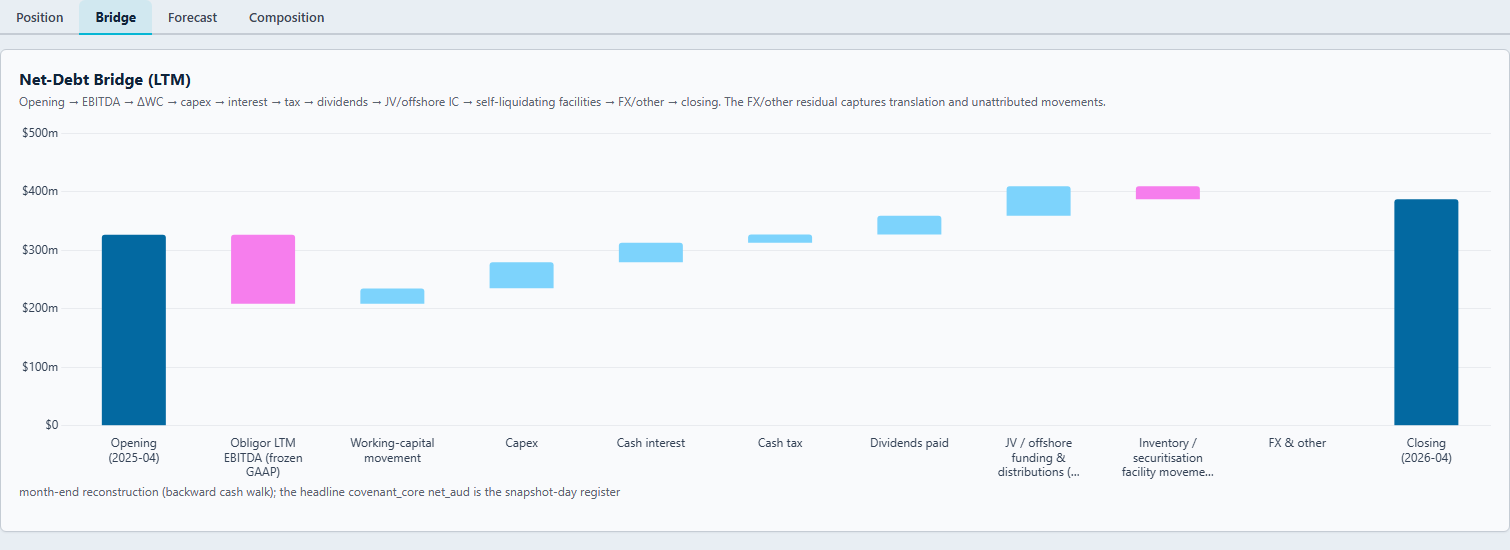
Net debt on the definitions that matter — covenant and statutory — plus the leverage and headroom trajectory and funding capacity, board-ready, with Q drafting the pack.
Forecast-vs-actual variance, the liquidity outlook, and exactly how FX and interest-rate moves change the plan.
A corporate treasury doesn't file prudential returns — it lives by its covenants and its own treasury policy. TraiQ tracks both, and projects headroom forward, so a breach is a conversation you open — not one your bank opens with you.
Leverage, interest-cover, gearing and minimum-liquidity covenants tested on the forward forecast — so a breach shows up months before the certificate does.
Lender compliance certificates and covenant packs drafted from live numbers, evidenced and ready for the syndicate.
Internal limits on counterparties, instruments and tenors monitored against your own treasury policy, with utilisation surfaced live.
Walk through Q, the forecast and the covenant board on our demo dataset — then talk about the entities, facilities and covenants that matter to your group.